

On a Tuesday morning in May 2026, the team at LsL Instruments — a small, family-run guitar company based in Van Nuys, California — opened an email that stopped the business cold. It was from Bird & Bird, one of Europe's largest commercial law firms, writing on behalf of Fender Musical Instruments Corporation. The letter was polite, in the precise way that legal threats tend to be. It informed LsL that they were infringing Fender's copyright in the Stratocaster body shape, demanded they immediately halt production and sales of their S-style models, recall all unsold inventory, destroy it, provide complete sales data for the previous several years, and pay damages. The deadline for compliance: 25 May 2026.
LsL makes fewer than 500 guitars per year. Fender makes roughly 500,000. And yet here was the world's most valuable guitar brand — worth an estimated $1 billion after its various private equity ownership chapters — deploying an international law firm against a boutique builder most guitar players have never heard of.
LsL was not alone. According to multiple industry sources and reporting from Guitar World, Guitar.com, and Gear Gods, Fender had sent similar letters to multiple guitar builders and retailers across Europe and, reportedly, the United States. The guitar community — luthiers, players, collectors, YouTubers, industry analysts — erupted online. GoFundMe campaigns for legal defence funds went live within hours.
This is not simply a story about a corporate legal dispute. It is a story about who gets to own a shape — a particular curve of alder wood, two elegantly asymmetric cutaways, a contoured back — that has appeared on more stages, in more bedrooms, and in more recording studios than any other electric guitar design in history. It is a story about the collision between intellectual property law and cultural inheritance, between corporate strategy and community, between a brand's legitimate interests and the ecosystem it helped create.
And at its heart, it raises a question that even Fender's own lawyers may struggle to answer definitively: Can you own an icon?
"We make less than 500 guitars a year, while Fender makes 500,000. Our small business poses no threat to them in any way whatsoever — yet here we are."
— LsL Instruments, public statement, May 2026
Fender Strikes Back — The Anatomy of a Legal Campaign
To understand the 2026 cease-and-desist wave, you have to trace it back to a courtroom in Düsseldorf, Germany, where, in March 2026, a judge handed down a ruling that Fender's legal team had been seeking — in various forms — for decades.
The case itself was, on the surface, straightforward. Fender had purchased a test guitar from a Chinese seller operating through AliExpress under the trading name "SHUFFLE Musical Instruments Store." The guitar cost approximately €62. It was, by all accounts, a near-perfect Stratocaster replica manufactured by a company called Yiwu Philharmonic Musical Instruments Co., shipped directly into Germany. Fender argued that delivery into the EU market brought it under German and EU intellectual property law.
The Düsseldorf Regional Court agreed. It declared that the Stratocaster body shape constituted "a work of applied art" under German copyright law — meaning it was an expression of original artistic creativity, not merely a functional industrial design. The ruling granted Fender enforceable copyright protection for the Stratocaster shape throughout the European Union.

There was one critical detail: Yiwu Philharmonic did not show up to court. The ruling was a default judgement — legally valid, but never stress-tested against a competing argument. Nobody appeared in Düsseldorf to challenge Fender's claims, to present counterevidence about the Stratocaster's design origins, or to argue that decades of open-market proliferation had affected the shape's protectability. The ruling existed in a legal vacuum.
Fender's general counsel, Aarash Darroodi, issued a press statement framing the decision as a landmark moment, adding that the ruling would not be used to restrict "innovation or healthy competition within the guitar industry." Those assurances lasted approximately six weeks.
By May 2026, Bird & Bird had begun dispatching cease-and-desist letters to guitar manufacturers, distributors, and retailers across Europe. The letters cited the Düsseldorf ruling and demanded immediate compliance: stop selling S-style guitars, recall unsold inventory, destroy it, hand over sales data, and pay damages. The financial penalty cited in the original ruling — €250,000 per infringement — featured prominently.
Guitar.com obtained and published a redacted copy of one such letter, which read in part: "You are therefore infringing our client's copyright in the Stratocaster body shape. As a consequence, our client has claims against you to cease and desist from further marketing such guitars, disclosure of information about your sales and marketing, damages, destruction of the infringing products, recall of the infringing products, and reimbursement of our legal fees."
The letter then set a hard compliance deadline with a barely veiled threat: "However, should you fail to respond accordingly within the deadline, we will advise our client to commence the required further judicial steps against you without further hesitation."
While Fender has not published a comprehensive list of recipients, industry reporting suggests the campaign has touched builders and retailers across multiple European countries. Brands speculatively identified in coverage include Sire Guitars, Harley Benton, Schecter, Ibanez, and the Yamaha Pacifica series — though only LsL Instruments has publicly confirmed receipt of a letter. LsL launched a GoFundMe campaign, raising over $7,000 within days. The guitar community's reaction was swift and largely critical.

Can You Trademark a Guitar Shape? A Plain-English Legal Analysis
The question sounds simple. The legal answer is anything but. Intellectual property law offers several potential avenues for protecting a product design, and understanding which applies — and how effectively — requires distinguishing between trademark, trade dress, copyright, and patent. Fender's 2026 campaign rests primarily on copyright, but its history has touched all four categories, and the distinctions matter enormously.
Patent was the first line of defence when Leo Fender designed the Stratocaster in 1954. Fender received design patents covering specific aspects of the original guitar. But patents are time-limited: US design patents last 14 to 15 years. By the early 1970s, every relevant Stratocaster patent had expired. Any manufacturer in the world was legally free to copy the shape.
The Four Pillars of Guitar IP Law
- Patent: Covers specific inventions or designs for a fixed term (14–20 years). Fender's original Strat design patents expired by the early 1970s. Once expired, the design enters the public domain.
- Trademark: Protects brand identifiers — words, logos, and shapes that function as source indicators. Requires active use and ongoing distinctiveness; can be cancelled if the mark becomes generic through widespread use by others.
- Trade Dress: A subset of trademark protecting the overall commercial appearance of a product. Fender has historically had more success defending its distinctive headstock shapes under trade dress than body shapes.
- Copyright: Protects original creative works. Duration is much longer (author's lifetime plus 70 years in the EU). Historically does not apply to functional industrial designs — but this is precisely what the Düsseldorf court challenged.
Trademark protects brand identifiers that function as indicators of source. For a shape to be trademarked, it must be distinctive: consumers must associate the shape specifically with one manufacturer, rather than viewing it as a generic or common design in the market. This is where Fender ran into serious trouble — a story explored in the next section.
Copyright, the basis of the 2026 Düsseldorf ruling, normally covers creative works: books, music, art. Industrial designs have historically been excluded from copyright protection in most jurisdictions, on the grounds that protecting the appearance of functional objects would give manufacturers monopoly power over how products look, not merely how they are branded. The court's determination that the Stratocaster qualifies as "applied art" — creative expression distinct from its functional purpose — is legally unusual, and is precisely the argument that any properly resourced defendant would challenge.
"The Düsseldorf ruling would face significant scrutiny if it were tested by a determined defendant," said one London-based IP attorney familiar with EU applied arts case law, speaking anonymously given the ongoing nature of the dispute. "A default judgement against a Chinese counterfeiter who didn't appear in court establishes a legal principle in theory, but on foundations that have never been load-tested. The moment a well-resourced European manufacturer contests this, the argument that the Stratocaster is original artistic expression — rather than functional industrial design that has been copied freely for 50 years — has to survive real adversarial scrutiny. That's a very different exercise."

The 2009 Problem — How Fender Lost the Plot on Shape Protection
The roots of Fender's current legal predicament stretch back to a series of decisions — and, more critically, non-decisions — made over five decades.
When Leo Fender designed the Stratocaster in 1954 (working alongside Freddie Tavares and incorporating feedback from country musicians including Bill Carson), he created something genuinely novel: a solidbody electric guitar with two deep cutaways, a contoured body, three single-coil pickups, a spring-loaded vibrato bridge, and a sleek, forward-looking silhouette. By any aesthetic standard, it was a designed object — as intentionally crafted as a piece of mid-century furniture.
Fender secured design patents at the time. What it did not do — could not do, given the law of the era — was claim copyright in the shape as an artistic work. And when competitors began producing Stratocaster-style guitars in the 1970s, Fender's response was inconsistent at best.

Japanese manufacturers — led by Tokai and Fernandes — were producing near-identical Stratocasters throughout the late 1970s and early 1980s. Fender responded not primarily through litigation, but by introducing its own lower-cost Squier brand in 1982. By absorbing the budget market rather than litigating it out of existence, Fender effectively endorsed the idea that S-style guitars were a category, not an exclusively owned design.
By the time Fender attempted to formalise legal protection in the early 2000s, the damage was done. The company filed trademark applications with the US Patent and Trademark Office for the body shapes of the Stratocaster, the Telecaster, and the Precision Bass. A coalition of manufacturers — including ESP, Schecter, and Suhr — filed formal oppositions. After years of proceedings before the Trademark Trial and Appeal Board (TTAB), Fender lost on all three applications.
The TTAB's reasoning was damning: the Stratocaster shape had become so ubiquitous in the marketplace that it no longer functioned as a source identifier — the fundamental requirement for trademark protection. As reported by Gear Gods in 2026, one court's language was particularly striking, describing the Strat shape as "so common that it is depicted as a generic electric guitar in a dictionary."
That verdict — issued definitively around 2009 — established a clear legal principle in US law: the Stratocaster body shape is not protectable as a trademark in the United States because it has become generic. Fender's decades of tolerating copies without consistent enforcement had contributed directly to that outcome.
Key Timeline: Fender's Shape Protection History
- 1954: Leo Fender designs the Stratocaster. Design patents filed covering specific elements.
- Late 1960s–early 1970s: Design patents expire. Global copying begins legally.
- 1970s–1980s: Japanese "lawsuit guitars" flood the market. Fender responds with Squier (1982) rather than litigation, implicitly acknowledging the S-shape as a market category.
- Early 2000s: Fender files USPTO trademark applications for Strat, Tele, and P-Bass body shapes.
- ~2009: TTAB denies all three applications. The Strat shape ruled too generic for US trademark protection.
- March 2026: Fender wins default copyright judgement in Düsseldorf Regional Court against Chinese AliExpress seller Yiwu Philharmonic. Shape declared "work of applied art" under German/EU law.
- May 2026: Bird & Bird begins sending cease-and-desist letters globally. LsL Instruments (Van Nuys, CA) goes public. GoFundMe launched.
The S-Style Economy — A Market Fender Helped Build
To appreciate what is at stake commercially, it is worth understanding the sheer scale of the S-style guitar market — and Fender's own complicated relationship with it.
Conservative estimates suggest that S-style guitars represent somewhere between 35 and 50 percent of all electric guitar sales globally. When you include parts, accessories, replacement hardware, and the second-hand market, the financial ecosystem built around this single body shape runs to hundreds of millions of dollars annually.

At the premium boutique end, builders like Suhr Guitars, Tom Anderson Guitarworks, Nash Guitars, Collings Guitars, and LsL Instruments produce S-style instruments typically costing between $2,000 and $6,000. These are not copies in any meaningful consumer sense — they are differentiated products with distinct identities, premium components, and dedicated followings. They compete in a market Fender's own American Professional and American Ultra lines address at a lower price point, generally between $1,300 and $2,000.
In the mid-market, brands like Sire Guitars, Schecter, Ibanez, and Yamaha's Pacifica series offer credible S-style instruments at $400–$1,200. At the entry level, the market fills with instruments from Harley Benton (Thomann's house brand), numerous Chinese and Indonesian manufacturers, and countless others producing instruments at every price point in between.
Then there is the aftermarket parts ecosystem. Warmoth — a company Fender itself attempted to acquire in the 1990s — has built a thriving business selling Stratocaster-compatible bodies, necks, and components since the 1970s. Its entire product catalogue is predicated on the Strat and Tele shapes being freely available for manufacture. Warmoth's existence, and the existence of dozens of similar companies worldwide, represents billions in cumulative revenue generated directly from the open availability of these designs.
"The Stratocaster shape is not a product. It is infrastructure. The entire global guitar industry is built on top of it."
— Guitar industry analyst, interviewed for this article
The economic logic from Fender's perspective is not difficult to understand. If Fender can establish exclusive ownership of the Strat shape in Europe — even partially, even imperfectly — the licensing and royalty revenues would be substantial. So would the competitive damage to rivals at the boutique and mid-market tiers.
But the counter-argument is equally compelling. The S-style guitar market did not emerge despite Fender — it emerged because of Fender. The proliferation of Stratocaster-style instruments drove demand for guitar playing broadly, created the cultural context in which Fender's own instruments became desirable, and built the supply chains and manufacturing knowledge bases that Fender's own non-US production relies upon. Strangling that ecosystem is not without cost to the entity that created it.
Gibson's Parallel Battles — Precedent, Pitfalls, and the Dean Verdict
Fender is not the first major guitar manufacturer to pursue aggressive shape protection. Gibson's long-running legal campaign over its iconic body designs offers both cautionary lessons and, more recently, some encouragement for Fender's broader strategy.
Gibson has fought shape-protection battles for decades. The company claimed trademark rights over the Les Paul single-cutaway body, the Flying V, the Explorer, and the SG. Its record is decidedly mixed.

One significant turning point came in 2005, when Gibson sued PRS Guitars over its Singlecut model, claiming infringement of its Les Paul trade dress. Gibson initially won a preliminary injunction — causing PRS to halt US Singlecut sales — but a federal appeals court reversed the ruling, finding the PRS instrument sufficiently distinct from the Les Paul. The case settled, but it established that even clearly Les Paul-inspired designs could survive legal challenge with sufficient visual differentiation.
Gibson's case against Dean Guitars — ultimately the most relevant recent precedent — wound through the courts for years. Gibson claimed that Dean's Flying V, Explorer, and SG-derived shapes constituted trademark infringement. Dean contested vigorously. Gibson won the first trial in 2022. Dean appealed. In a retrial, a jury found Dean's parent company, Armadillo Enterprises, guilty of trademark infringement and counterfeiting of Gibson's guitar shapes. The verdict was significant: it demonstrated that shape protection is achievable, but only under specific conditions. Dean's guitars were being marketed in ways that courts found deliberately evocative of Gibson's designs.
Gibson also contested its EU trademark on the Flying V shape — and lost. A European court ruled that Gibson had waited 52 years after launching the guitar before filing for EU protection, and that this delay was itself evidence that the company had not historically treated the design as proprietary intellectual property. That reasoning — that tardiness in asserting rights is evidence that rights do not robustly exist — is a direct parallel to the argument Fender faces in 2026.
Gibson vs. Dean: Key Takeaways for the Fender Situation
- Gibson spent years in litigation before securing a final verdict, with substantial costs on both sides
- Success in the Dean case was partly because the infringement appeared intentionally deceptive — a harder argument to make against differentiated boutique builders
- Gibson lost its EU Flying V trademark claim due to a 52-year delay in filing — directly analogous to Fender's decades of tolerating Strat copies
- A single landmark ruling does not automatically resolve future cases; each contest requires independent litigation with its own evidentiary record
Builders Respond — Fear, Defiance, and the GoFundMe Guitar Campaign
The guitar-building community's response to Fender's campaign has been overwhelmingly negative — and remarkably unified for an industry that is, by its nature, fiercely independent.
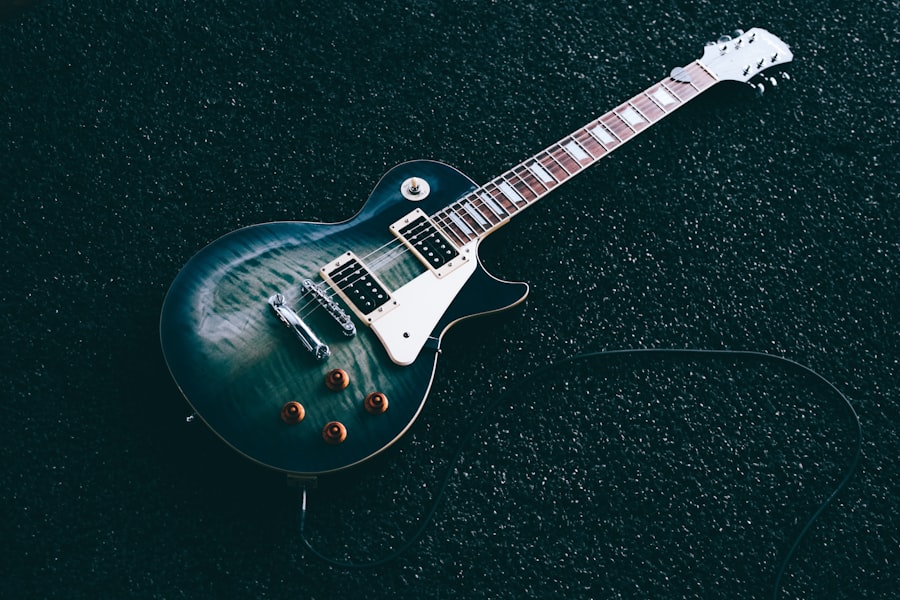
LsL Instruments' public statement captured a sentiment shared widely: the fundamental asymmetry between a corporation capable of funding sustained international litigation and a small manufacturer whose entire operation could be bankrupted by the cost of responding to legal threats, regardless of their ultimate merit. "If we fight this solely on our own," LsL wrote, "there is a very good chance we could be bankrupted, out of business quickly, and we are not alone in this position."
This dynamic — sometimes called "trademark bullying" by IP critics — is a well-documented phenomenon in intellectual property law. Because cease-and-desist letters carry no direct legal enforcement capability (they are demands, not court orders), recipients must decide whether to comply, negotiate, or mount a defence. For smaller builders, the rational response may be compliance even when they believe the claims are legally weak. This is, arguably, precisely what the strategy is designed to achieve.
"A cease-and-desist letter is a formal demand, not a court order. But for a company with twelve employees and a two-machine shop, the cost of saying so in court is the same as losing."
— IP attorney, speaking anonymously
Several larger builders and industry observers have offered more defiant assessments. Reports from yamahamusicians.com and Guitar.com suggest that some larger manufacturers potentially affected — companies with the resources to mount a credible legal defence — are exploring coordinated responses. If a consortium of European and international manufacturers were to collectively challenge the Düsseldorf ruling's applicability, the legal landscape could shift dramatically.
A fully contested case, argued on both sides, would force the question of whether a mass-produced guitar shape from 1954 genuinely constitutes "original creative expression" under European copyright law — and would do so in a forum where Fender's decades of non-enforcement and the 2009 US genericness ruling could be introduced as evidence.
Others in the industry have noted the broader commercial irony: many boutique builders now receiving cease-and-desist letters have spent years recommending Fender instruments to their customers, directing players toward Fender dealers, and participating in the cultural ecosystem that makes Fender's brand valuable. The relationship between Fender and the boutique builder community has historically been symbiotic rather than competitive. That relationship now faces existential strain.

Does Fender Own the Strat? — The Cultural and Philosophical Argument
Beneath the legal proceedings, the trademark applications, and the cease-and-desist letters lies a deeper question that courts may be imperfectly equipped to resolve: what does it mean to own a design that has become cultural infrastructure?
The Stratocaster is not, at this point in history, merely a guitar. It is a symbol — arguably the most widely recognised symbol of the electric guitar and, by extension, of popular music itself. Its silhouette appears on bedroom walls in Jakarta and Johannesburg, on backstage passes at festivals in Berlin and Nashville, in the logos of guitar schools and music streaming platforms and rock encyclopaedias. When a child draws a picture of "a guitar," the shape they draw is, statistically, likely to resemble a Stratocaster.

That cultural saturation is simultaneously Fender's strongest commercial argument and its greatest legal liability. Players do associate the shape with quality, authenticity, and musical heritage. But they associate it with those qualities in the abstract — not exclusively, and perhaps not primarily, with Fender as a specific manufacturer. A survey of guitar players asked to identify a Stratocaster would likely succeed at high rates. A survey asking whether a Stratocaster must be made by Fender would likely show far less certainty.
This is the precise tension at the heart of genericness doctrine: a design can be famous and universally recognised without that recognition functioning as a source indicator in the legal sense. The word "aspirin" was once a proprietary brand name; it became generic through the same process of cultural absorption that US courts have already concluded affected the Stratocaster shape. Whether European courts will reach the same conclusion remains open.
There is also a philosophical argument worth making about cultural ownership more broadly. The Stratocaster's design was influenced by existing design culture — by mid-century American automotive styling, by the contour-furniture aesthetics of Charles and Ray Eames, by the functional design principles that Leo Fender absorbed from decades of working with musicians. It was a synthesis, not a creation from nothing. The builders who now produce S-style instruments are, in a real sense, participating in the same synthesising tradition that produced the Stratocaster in the first place.
This argument carries limited weight in a courtroom but considerable weight in the court of public opinion — and in 2026, for an American brand operating in a European market already inclined toward scepticism of US corporate behaviour, that court matters.
What Happens Next? — Scenarios, Stakes, and the Question Fender Can't Avoid
As of late May 2026, the situation is fluid. Several distinct scenarios could unfold over the coming months, each with materially different implications for Fender, for the broader guitar industry, and for the musicians who play these instruments.
Scenario One: Smaller builders comply, larger ones negotiate. The most commercially pragmatic outcome. Boutique makers with limited legal resources cease EU sales of S-style instruments or significantly redesign their bodies. Larger manufacturers negotiate licensing arrangements or introduce meaningful design modifications. Fender achieves partial market restructuring without protracted litigation, at the cost of significant brand goodwill.
Scenario Two: Coordinated legal challenge. A consortium of manufacturers pools resources to contest Fender's claims in European courts. The Düsseldorf ruling is subjected to full adversarial scrutiny for the first time. If challengers succeed, Fender's entire European campaign collapses. If Fender succeeds, the industry faces a fundamental restructuring of what S-style manufacturing in Europe means legally.
Scenario Three: The campaign narrows to counterfeits. Faced with mounting brand criticism and the credible threat of a coordinated legal defence, Fender narrows its enforcement to genuinely counterfeit products — the €62 AliExpress guitars that were the original basis of the campaign. This would represent a face-saving but strategically significant retreat from the broader ambition the cease-and-desist letters imply.
Scenario Four: Protracted multi-year litigation. Following the Gibson/Dean model, the dispute extends across multiple jurisdictions and years, with different outcomes in different courts, before eventually resolving in ways that neither party fully controls.

The Critical Point That Keeps Getting Lost
A cease-and-desist letter carries no direct legal enforcement capability. It is a formal demand, not a court order. For Fender to act on non-compliance, it would need to initiate separate legal proceedings against each individual builder or retailer and win each case on its own merits — against defendants who, unlike the AliExpress seller, will actually appear in court and mount a defence. That changes everything. The Düsseldorf ruling was never challenged. Any new case against a legitimate manufacturer would be subject to far more rigorous scrutiny, and Fender's legal position has notable weaknesses — not least the 2009 US genericness ruling and decades of non-enforcement.
Conclusion: An Icon in Court
The Stratocaster turned 72 in 2026. In that time, it has been played on every continent, in every genre, by artists from Buddy Holly and Jimi Hendrix to Stevie Ray Vaughan and John Mayer. Its shape has appeared on more recordings than any other electric guitar design. It is, by reasonable measure, the most culturally significant designed object in the history of popular music.
And now it is in court. Or more precisely: Fender is trying to put it there.
The legal questions are genuinely complex. Whether a design patent's expiration truly exhausts all IP rights; whether copyright in "applied art" can survive decades of mass-market copying; whether a default judgement against an absent defendant creates binding precedent applicable to legitimate manufacturers — these are not trivial questions, and reasonable IP attorneys disagree about the answers.
But the cultural questions are simpler, and ultimately more important for a brand whose commercial value rests not on legal rights but on love. Players love Fender instruments. They love the history, the feel, the sound, the stories. That love is not transferable to a legal filing. And there is a long, well-documented history in consumer markets of brand campaigns that won in court and lost in the world — companies that secured their legal position while surrendering the goodwill that made them worth protecting in the first place.
The boutique builders now receiving cease-and-desist letters are not Fender's competitors in any meaningful sense. They serve a customer who wants something Fender doesn't make: a handcrafted, personalised, deeply idiosyncratic version of a familiar form. Many of those customers own Fender guitars. The ecosystems overlap; they do not compete.
The Stratocaster was designed by a man who believed a guitar should be a tool: practical, affordable, and available to anyone with something to say. The story of what happens to his guitar's body shape in European courtrooms will say something significant about what the music industry has become. Whether it says something Fender wants said remains, for now, unanswered.
Frequently Asked Questions
Has Fender actually won the right to own the Stratocaster shape?
Not unconditionally. Fender secured a default copyright judgement in the Regional Court of Düsseldorf, Germany in March 2026, against a Chinese manufacturer that did not appear in court. This ruling established copyright protection in Germany/EU in that specific case, but it has never been tested against a contesting defendant. In the United States, Fender's attempts to trademark the Strat body shape were denied around 2009, with the shape ruled too generic for trademark protection.
What is Fender demanding from builders?
According to cease-and-desist letters reported by Guitar.com and Guitar World in May 2026, Fender's law firm Bird & Bird is demanding that recipients immediately halt manufacturing and sales of Stratocaster-style guitars, recall unsold inventory, destroy it, provide sales data, and pay damages and legal fees — with a compliance deadline of approximately 25 May 2026.
Can a boutique builder legally ignore a Fender cease-and-desist letter?
A cease-and-desist letter is a legal demand, not a court order. Recipients are under no obligation to comply simply because a letter arrived. However, non-compliance may prompt Fender to initiate formal legal proceedings, which require each party to defend itself in court — an expensive process regardless of the case's ultimate merits.
Does this affect guitar players in the US?
The Düsseldorf ruling applies within the EU. It does not create direct enforcement rights in the United States, where the Strat body shape has been ruled too generic for trademark protection. However, some US-based builders have reportedly received letters, and the situation could affect availability and pricing of S-style instruments sold into European markets.
How does this compare to Gibson's shape protection battles?
Gibson pursued Dean Guitars over Flying V, Explorer, and SG shapes in a case that lasted years, ultimately winning a retrial verdict around 2022–2023. Gibson also lost its EU Flying V trademark application after a court noted a 52-year delay in filing. Both cases illustrate that shape protection is achievable in specific circumstances but is rarely straightforward — and that delay in asserting rights significantly weakens legal claims.
Which boutique builders are affected?
As of May 2026, LsL Instruments (Van Nuys, California) is the only builder to have publicly confirmed receiving a cease-and-desist letter. Industry reporting has speculatively identified Sire Guitars, Harley Benton, Schecter, Ibanez, Yamaha Pacifica, and Suhr as potentially affected, but none of these companies had publicly confirmed receipt of letters at time of publication.
Sources & References
- Guitar.com — "Fender reportedly demands boutique builders stop making Stratocaster-style guitars" (May 2026)
- Gear Gods — "Fender's Stratocaster Crackdown Begins: First Cease and Desist Issued to U.S. Builder" (18 May 2026)
- yamahamusicians.com — "Fender's European Legal Campaign: What the Guitar Community Actually Needs to Know" (May 2026)
- Guitar.com — "Fender EU/Germany Stratocaster Trademark Ruling" (March 2026)
- Bird & Bird press release — "Bird & Bird erstreitet wegweisendes Urteil für Fender zum Schutz des Stratocaster-Designs" (2026)
- LsL Instruments — Public blog statement and GoFundMe campaign (May 2026): unleavenedshred.wordpress.com
- Guitar.com — "Gibson triumphs in revived trademark case against Dean" (2023)
- MusicRadar — "Fender loses guitar copyright case" (reporting on 2009 TTAB ruling)
- Guitar.com — "Gibson vs PRS Singlecut" feature analysis (2005 coverage)
- Reddit r/Guitar — Community discussion threads (May 2026)
- Trademark Trial and Appeal Board (TTAB) records — Fender trademark applications (2000s–2009)
- Guitar World — "Fender escalates legal campaign against S-style guitars" (May 2026)
- Ghost Cult Magazine — "Gibson Wins Trademark Ruling on Guitar Shapes"